There’s a particular kind of heartbreak reserved for brands we’ve trusted for years — the quiet sting of watching something you loved change shape right in front of you. That’s exactly what’s playing out right now with Olive Young’s first physical stores in the United States, and if you’ve spent any time in K-beauty Reddit threads or Instagram comment sections over the past few weeks, you already know the mood is anything but celebratory.
Two stores opened near Los Angeles. A brand-new, US-only online mall launched alongside them. On paper, it should have felt like a long-awaited homecoming for a retailer that built its American fanbase the hard way — one viral COSRX serum, one Anua restock alert, one Medicube TikTok at a time. Instead, barely a month in, the loudest word attached to the launch isn’t “exciting.” It’s “expensive.”
A Homecoming That Didn’t Feel Like One
Here’s the thing about loyalty built online: it’s portable, but it’s also fragile. For years, the global Olive Young mall was the unofficial front door to Korean skincare for shoppers everywhere outside Korea — Vietnam, India, the US, all funneled through one site, one membership system, one set of prices that felt refreshingly close to what people were paying in Seoul.
When the US-exclusive mall launched, that door didn’t just get a new welcome mat. It got locked, and everyone’s old account got quietly moved through a side entrance into a different building entirely — one with different rules, different math, and, as it turns out, a noticeably different price tag.
The Math People Are Actually Doing
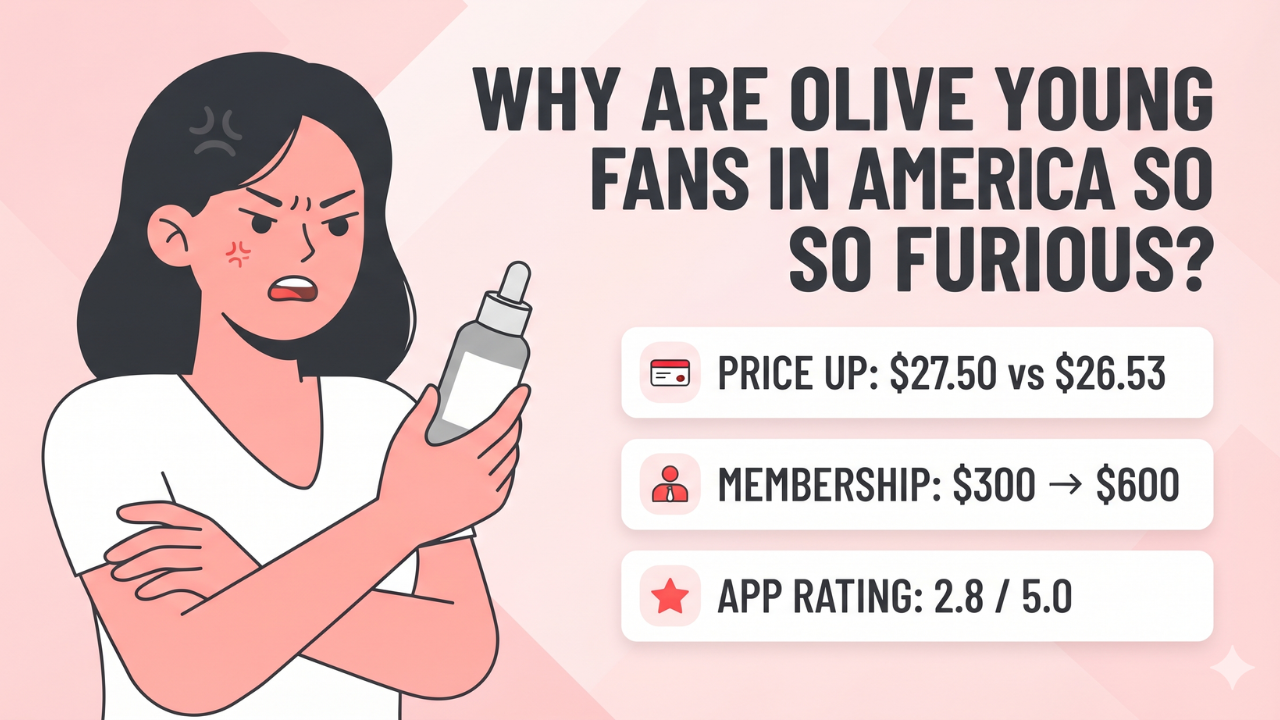
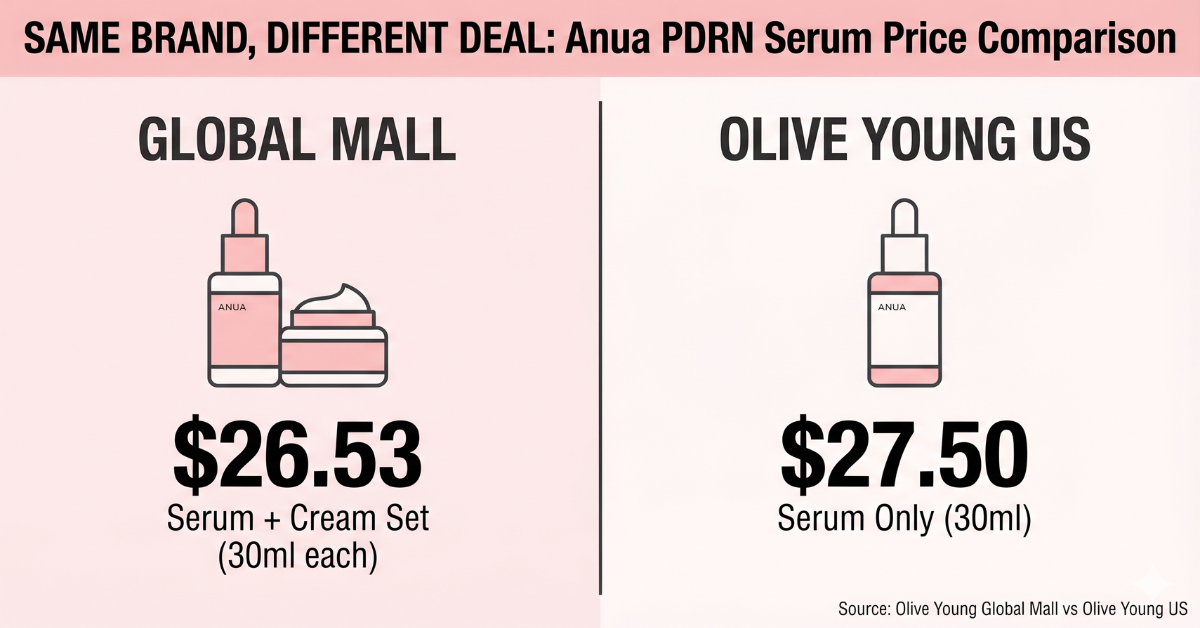
It started, as these things often do, with one screenshot. Someone compared the price of an Anua PDRN Hyaluronic Acid Capsule serum on the new US site against what the same product used to cost on the global mall — where it had been bundled with a matching cream of the same size for a combined price lower than what the serum alone now costs solo. Add US sales tax on top, something the global mall’s international checkout didn’t always apply the same way, and the gap stops looking like rounding error and starts looking like a real price increase wearing a “localization” costume.
That’s the kind of detail that spreads fast in beauty communities, because it’s checkable. Anyone with both sites open in two tabs can verify it themselves, and a lot of people did exactly that.
Wait, This Isn’t Just Olive Young Products?
The second complaint took a little longer to surface, but it cuts just as deep. Visitors walking into the Pasadena locations expecting a wall of Olive Young’s famously curated, hard-to-find Korean exclusives instead found a fair amount of shelf space taken up by brands you can already grab at Ulta or Sephora.
That’s a quiet but serious problem for a retailer whose entire identity in Korea is built on curation — being the place that finds the next great niche brand before it blows up internationally. If a chunk of what’s on the shelf is stuff you didn’t need to fly to a K-beauty specialist for, the trip itself starts to feel less essential.
The Membership Change Nobody Asked For
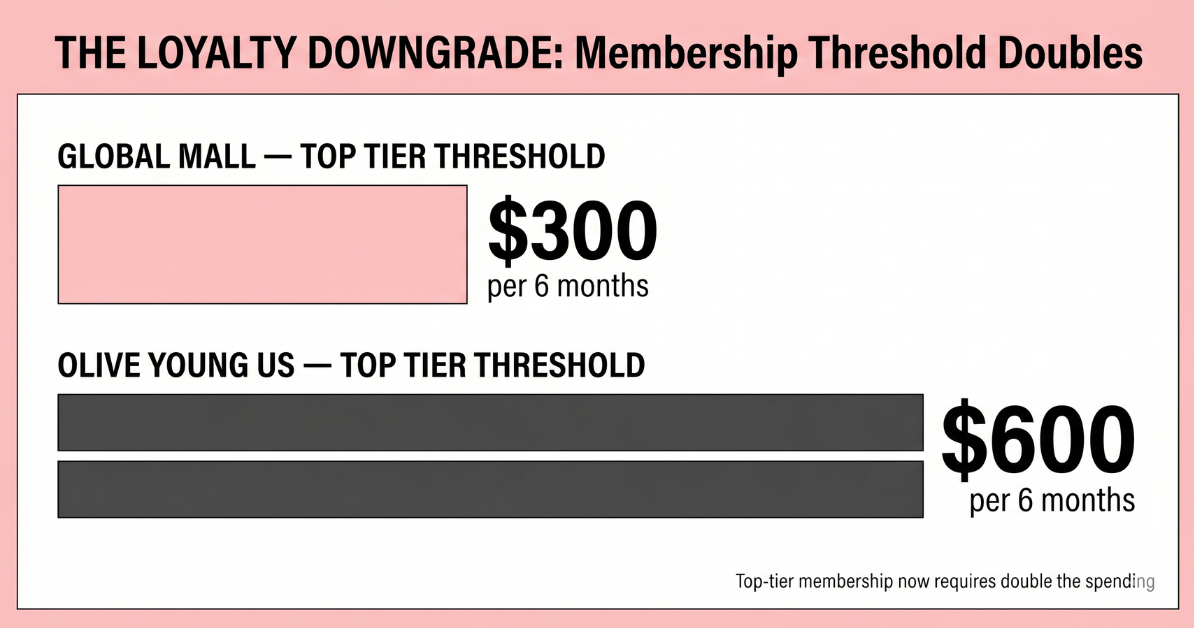
If pricing was the spark, the loyalty program overhaul was the part that actually made longtime members angry. The global mall let shoppers hold top-tier status by spending $300 or more in a rolling six-month window. The new US mall doubled that bar to $600 — overnight, for an audience that had already earned their status the old way.
On top of that, points and tier status carried over from the global mall only transferred for customers who explicitly opted in, and even then, with a delay. For people who’d spent real money building up real perks, watching that status quietly slip out of reach felt less like a system upgrade and more like being asked to pay twice for the same loyalty.
It Shows Up in the Numbers, Not Just the Comments
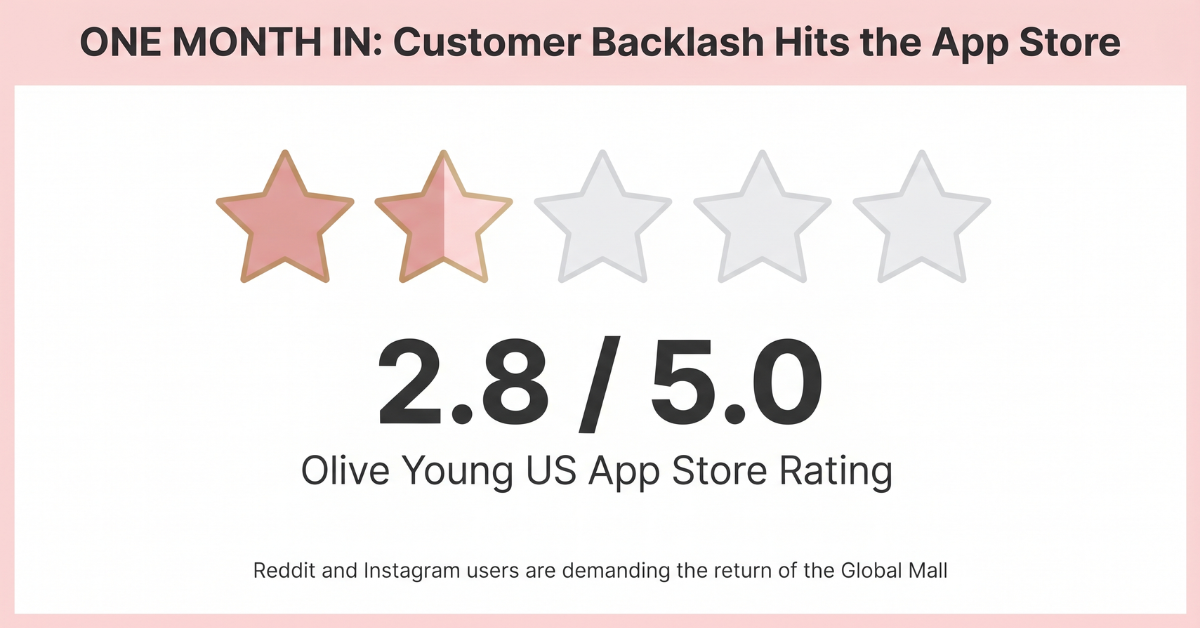
This isn’t a handful of loud voices online — it shows up in the data too. The new US app has slid to roughly 2.8 out of 5 stars, and “bring back the global mall” has become something close to a rallying cry across Reddit and Instagram, with petitions circulating to push the company to reverse course.
Olive Young did respond publicly, posting a statement about ten days after launch that addressed pricing, membership, and the overall experience. Their explanation: the global mall’s lower spending thresholds were calibrated for a much broader, lower-cost-of-living customer base across multiple countries, and the US system was adjusted “to reflect local conditions.” They also pointed out that in-store perks are now reflected online too, so the comparison isn’t quite as simple as benefits being slashed outright. On points, they confirmed transfers require consent, which explains the delays some shoppers experienced. They’ve also promised US-specific promotions down the line.
Reasonable explanation, sure. But explaining a price increase doesn’t make it feel smaller to the person paying it.
The Stores Themselves? Actually Pretty Good
Here’s the twist that gets lost in the online outrage: people who’ve actually walked into the Pasadena stores tend to come away with mixed-to-positive impressions. The layout is clean, organized, and genuinely pleasant to browse. Being able to test a serum’s texture or check a shade in person before buying is something the online-only experience never offered, and most reviewers liked the selection of trending Korean skincare and makeup, plus the fun extras like Artbox stationery and snacks near the checkout.
Even those happy in-store shoppers, though, tend to add the same footnote: it’s still cheaper to order the exact same product through other channels.
So What Should You Actually Do?
If you’re a longtime global mall shopper, the smartest move right now is simple: stop assuming Olive Young US is just a faster, local version of what you’re used to, and start comparing prices product by product before you check out. The gap isn’t universal, but on plenty of items it’s real and it’s worth catching before you pay it.
If you’re near one of the physical stores, treat it the way you’d treat any specialty showroom — go test textures, scents, and shades in person, then decide afterward where it actually makes sense to buy. That’s not disloyalty to the brand; it’s just being a smart shopper in 2026.
And if you’re chasing premium membership status, recalibrate your math now. The $300 threshold that used to get you there is gone in the US system — you’re looking at $600 to hit the same tier, so plan your routine restocks accordingly if status perks matter to you.
Worth knowing: a handful of other global K-beauty retailers, including names like Stylevana, have continued carrying a broad catalog of the same Korean exclusives — Anua, COSRX, Medicube, and beyond — without the same threshold reset. Whether that’s the right fit for your routine depends on your own price and selection priorities, but it’s an option worth being aware of as the US K-beauty retail landscape keeps shifting.
The Bigger Picture
None of this is really about K-beauty losing steam in the US — demand has never been higher, and that’s exactly why this launch matters so much. It’s a textbook case of what happens when a beloved brand localizes aggressively and fast, without fully accounting for how attached its existing customers were to the system it replaced.
Whether Olive Young US turns this around will likely come down to the next few months: does the membership threshold get walked back, does pricing sharpen up to compete with the global mall it replaced, and does the curated brand mix get sharper again? Or does the company bet that in-person convenience eventually outweighs the price and loyalty complaints?
For now, the message from customers is about as clear as it gets: they want the global mall back. How Olive Young responds in the coming months will decide whether this becomes a successful first chapter in the US, or a cautionary tale about growing too fast, too soon.
💡 Frequently Asked Questions
Is Olive Young US more expensive than the global mall?
For a number of products, yes — shoppers have documented specific items costing more on the US-exclusive mall than they did on the global site, especially once US sales tax is factored in.
Did my global mall account and points transfer automatically?
Not automatically. Olive Young has confirmed that point and tier transfers only happen with explicit customer consent, which is why many shoppers experienced delays during the migration.
Can I still shop the global Olive Young catalog from the US?
The original global mall experience is no longer the default path for US shoppers, but other global K-beauty retailers — Stylevana among them — continue to carry a similar catalog with US shipping.
✨ Weekly K-Beauty tips & skincare secrets — straight to your inbox
Free subscription · Cancel anytime