This post contains affiliate links. We may earn a commission at no extra cost to you.
It’s 7:40 on a November morning. The heater clicked on an hour ago, and your cheeks have already done the thing: a warm, patchy pink that spreads from the sides of your nose and settles in for the day. You’ve tried “calming” serums that felt like water and changed nothing, and “treatment” serums that stung hard enough to make the redness worse. The Anua Azelaic Acid 10 Hyaluron Redness Soothing Serum was made for exactly that gap: a well-studied active at a real 10% concentration, folded into a hydrating, cica-rich base designed for skin that flushes easily.
Since its 2024 launch, it has become one of Anua’s most talked-about serums and has appeared on Olive Young US’s best-seller ranking. Below we break down the key ingredients, where the formula is clever, where marketing outruns the label, and who should reach for it.
The Dewy Brief
What it is: A lightweight, fragrance-free leave-on serum (30 mL / 1.01 fl. oz.) built around 10% azelaic acid for visible redness, bumps and post-blemish marks.
Hero ingredients: 10% azelaic acid, sodium hyaluronate, panthenol, seven centella (cica) ingredients, niacinamide, zinc PCA and ceramide NP.
Best for: Redness-prone, blemish-prone and combination skin that wants an active without the harsh, stripped feeling.
Editor’s take: One of the most wearable azelaic acid formats on the market. It is not a prescription-strength treatment, and very reactive skin should still ramp up slowly.
Why Azelaic Acid Became K-Beauty’s Quiet Breakout Star
For years, K-Beauty’s global reputation rested on hydration: essences, ampoules, ten-step layering. The newer wave is something Korean formulators call low-irritation efficacy, meaning real actives delivered in bases so soothing that sensitive skin can actually stay on them long enough to see results. Azelaic acid fits that philosophy almost perfectly.
It is not a trendy newcomer. Dermatologists have used azelaic acid for decades, and a 2024 review in Clinical, Cosmetic and Investigational Dermatology notes that azelaic acid is FDA-approved for papulopustular rosacea and also shows efficacy for acne and melasma, with antibacterial, anti-inflammatory and antioxidant activity. Prescription versions typically sit at 15% to 20%. Cosmetic serums like this one use 10%, trading some strength for daily comfort.
What Korean brands added is the surround. Instead of a thick, chalky suspension, Anua pairs the acid with humectants, a dense centella complex and barrier lipids. Timing matters too: every winter, indoor heating, wind and hot showers push easily flushed skin over the edge.
What’s Inside the Anua Azelaic Acid 10 Hyaluron Redness Soothing Serum
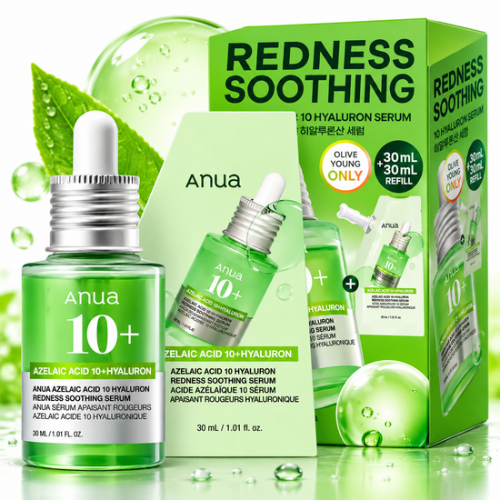
The Anua Azelaic Acid 10 Hyaluron Redness Soothing Serum is a single product, not a set: one 30 mL (1.01 fl. oz.) glass dropper bottle of pale green serum. According to the brand, the natural green tint comes from aloe and its seven types of cica, not from added dye. Anua describes the formula as fragrance-free and states it completed a clinical test for soothing skin redness caused by dryness.
- Size: 30 mL / 1.01 fl. oz., about one to two months of use depending on frequency.
- Format: Watery serum in a dropper, designed to layer under moisturizer.
- Fragrance: Listed as fragrance-free by the brand and major retailers.
- Vegan / cruelty-free: Independent ingredient databases and several retailers list it as vegan and cruelty-free. Anua’s own certification status can vary by market, so check the current box if this matters to you.
Ingredient Deep Dive: How the Formula Actually Works
10% Azelaic Acid: The Active Engine
Azelaic acid is a dicarboxylic acid that occurs naturally in grains like wheat and barley, though cosmetic grades are typically made in a lab for purity and stability. It works on several fronts at once: it calms visible inflammation, discourages acne-related bacteria, normalizes how skin cells shed inside pores, and slows excess pigment production. That multitasking is why one ingredient can address redness, bumps and leftover dark marks together.
Format matters here. In a leave-on serum, the acid sits on skin for hours, which is what you want for redness and marks, but it also means formulation comfort decides whether people keep using it. Notice that sodium hydroxide sits fourth on the ingredient list. Azelaic acid dissolves poorly in water, and a pH adjuster that high usually signals the acid has been partially neutralized so it can stay dissolved in a light serum and feel gentler. Anua does not publish the final pH, so we won’t guess a number. The practical takeaway: expect a comfortable daily serum, not a clinical-strength peel.
Honest context: a Cochrane review of topical acne treatments found that azelaic acid probably works less well than benzoyl peroxide for acne, but about as well as tretinoin on overall response. Azelaic acid’s real strength is that rare combination of breadth and tolerability, especially for redness.
The “Hyaluron” Hydration Layer
Humectants do a lot of heavy lifting in this formula: propylene glycol and dipropylene glycol, glycerin, panthenol (pro-vitamin B5), biosaccharide gum-1, beta-glucan and sodium hyaluronate. Together they offset the slight dryness acids can cause, which is the main reason people quit azelaic acid in the first place.
One caveat worth flagging: some retailers advertise a “triple hyaluronic acid” complex, but the ingredient lists we reviewed show a single hyaluronic form, sodium hyaluronate. The hydration is real either way, because glycerin and panthenol carry much of the load, but check the box in front of you, since formulas can be updated between batches and markets.
Gentle Calming Complex and Seven Cica Ingredients
This is the most distinctly Korean part of the formula. Rather than a single centella extract, the list includes centella asiatica extract, leaf extract and root extract plus its four isolated actives: madecassoside, asiaticoside, asiatic acid and madecassic acid. Korean cica science leans on this “whole plant plus purified compounds” approach to cover soothing, barrier support and post-irritation recovery at once. Allantoin, dipotassium glycyrrhizate (from licorice root), aloe leaf juice and green tea leaf water round out the calming side.
Anua markets its Gentle Calming Complex as including blue tansy oil. However, the full ingredient lists we checked from retailers and ingredient databases do not show blue tansy oil. That may reflect a regional or updated formula, so if you are sensitive to essential oils, read the current label before buying.
The Supporting Cast: Niacinamide, Zinc, BHA and Barrier Lipids
Further down the list, smaller amounts of niacinamide and zinc PCA add oil balance and tone support, while betaine salicylate offers a mild, salicylic-acid-adjacent touch for pores. Ceramide NP and squalane provide a light lipid layer. None are headline doses; it’s the K-Beauty “multi-active, low-dose” philosophy in action.
Texture, Scent and Finish
Verified buyers consistently describe the texture of the Anua Azelaic Acid 10 Hyaluron Redness Soothing Serum as lightweight and slightly hydrating, closer to a watery essence than the thick, gritty creams azelaic acid is known for. It absorbs quickly and leaves a soft, non-sticky finish that layers easily under moisturizer, sunscreen and makeup. The pale green tint disappears on skin.
There is no added fragrance, and most people report no noticeable scent. The fair caveats: a mild tingle during the first few uses is common with any azelaic acid and usually fades as skin adjusts. Also, propylene glycol sits near the top of the list. It’s widely used and generally safe, but a few very sensitive people react to it, so patch test first.
How to Use the Anua Azelaic Acid 10 Hyaluron Redness Soothing Serum
- Cleanse gently. Use a low-pH, non-stripping cleanser and pat skin mostly dry.
- Tone if you like. A simple hydrating toner works; skip exfoliating toners on the nights you use this serum.
- Apply 1–2 drops to start. Press over the face, focusing on red or blemish-prone zones. Retailers relaying the brand’s guidance suggest building gradually toward up to five drops.
- Wait about a minute. Let it absorb before the next layer to reduce pilling.
- Seal with moisturizer. A barrier-friendly cream keeps hydration in and buffers any tingling.
- Morning use? Finish with SPF. Azelaic acid is not known to cause sun sensitivity, but redness and dark marks both worsen with UV exposure.
💡 Dewy Tip: The Slow Start Rule
Begin with two or three evenings a week for the first two weeks, then move to nightly, then twice daily only if your skin stays calm. If you already use a retinoid or strong AHA, alternate nights at first instead of stacking them.
Skin Type Compatibility
| Skin Type | Fit | How to Make It Work |
|---|---|---|
| Oily | ★★★★★ | Light enough for twice daily once adjusted; pair with a gel moisturizer. |
| Combination | ★★★★★ | Use all over, add an extra drop on the T-zone or around breakouts. |
| Sensitive | ★★★★☆ | Patch test first; start 2–3 nights a week and apply over moisturizer if it tingles. |
| Acne-Prone | ★★★★☆ | Great for redness and marks; active breakouts may still need a dedicated treatment. |
| Normal | ★★★★☆ | Use for tone and texture once daily, usually in the evening. |
| Very Dry | ★★★☆☆ | Follow with a rich cream; consider the hydration-first alternative below. |
How It Compares
The Anua Azelaic Acid 10 Hyaluron Redness Soothing Serum is an active-first product: its job is to calm visible redness and refine texture. Some readers, though, are really fighting dehydration-driven redness, or they want plumpness more than correction. Not sure it’s the one? Here’s a gentler, hydration-first alternative worth comparing side by side.
Dewyfile Alternative Pick
Comparing Options? Meet the Donggubat Red Hyaluronic PDRN 500 Ampoule
Where Anua leads with an acid, Donggubat’s 50 mL ampoule leads with moisture: retailers list PDRN, hyaluronic acid, exosome and panthenol, positioning it for “inner dryness” and seasonal transitions. It suits dehydrated, tight-feeling skin that turns pink when moisture runs low and doesn’t want an active at all. Donggubat is also a Korean social-enterprise brand built around sustainable daily routines created together with people with developmental disabilities.
| Anua Azelaic Acid 10 Serum | Donggubat PDRN 500 Ampoule | |
|---|---|---|
| Approach | 10% azelaic acid + cica soothing | PDRN + hyaluronic hydration, no acid |
| Best for | Redness, bumps, post-blemish marks | Dehydration, tightness, dull bounce |
| Choose it if | You want a gentle active that corrects | You want comfort and plumpness first |
Also Worth Knowing: Anua PDRN Hyaluronic Acid Capsule 100 Serum
If you love Anua’s textures but want hydration rather than an acid, its PDRN Hyaluronic Acid Capsule 100 Serum is the in-brand sibling. The brand pairs PDRN (sodium DNA) with hydrolyzed collagen and multiple hyaluronic acid forms, plus niacinamide and glutathione, in an emerald-toned serum; retailers describe it as free of artificial fragrance. Pick it for plumping and glow; pick the Anua Azelaic Acid 10 Hyaluron Redness Soothing Serum for redness and texture. Readers outside the US can find it as a double pack on Olive Young Global via the Where to Buy box below (that store does not ship to the 50 US states).
Honest Pros & Cons
✅ Pros
- A meaningful 10% azelaic acid in a light, wearable serum
- Dense cica and humectant base that offsets dryness
- Fragrance-free and layers cleanly under makeup
- Targets redness, bumps and marks in one step
- Easy to find in the US through Olive Young US and Amazon
⚠️ Cons
- Not as strong as 15–20% prescription azelaic acid
- Mild tingling is common during the first uses
- 30 mL goes fast if you use it twice daily
- Marketing (blue tansy, “triple” HA) doesn’t fully match some ingredient lists
- Propylene glycol near the top may bother a few very reactive users
Building a Routine Around It
Think of the Anua Azelaic Acid 10 Hyaluron Redness Soothing Serum as the treatment step and build everything else to support it. In the evening: gentle cleanser, hydrating toner, azelaic serum, then a barrier cream. If you want a plumping step, a PDRN or hyaluronic serum can go on afterward on alternate nights; our review of the Anua PDRN 4-Step Glowy Skin Set shows how the brand’s hydration line layers together.
In the morning, keep it simple: serum (once your skin is comfortable with twice-daily use), light moisturizer and a sunscreen you’ll actually reapply. UV is one of the most common triggers for flushing and darkening marks, so this step protects everything the serum does at night. A lightweight hydrating sun serum like the one in our Round Lab Birch Juice Sun Serum review pairs well with acid-treated, redness-prone skin.
Avoid stacking it with strong acids, retinoids or vitamin C on the same night at first, and give it eight to twelve weeks of consistent use before judging results.
Where to Buy
Anua Azelaic Acid 10 Hyaluron Redness Soothing Serum
Choose the store that works best for you:
These are affiliate links; we may earn a commission at no extra cost to you.
New to the US store? Read our Olive Young US review first.
Shop the Alternative
Prefer the hydration-first option? Get it here:
✨ Discover What’s Next in K-Beauty → Musinsa Beauty Donggubat Red Hyaluronic PDRN 500 Ampoule · Seoul’s trending new drops & rising-star brandsThis is an affiliate link; we may earn a commission at no extra cost to you. Patch test any new product first.
The Dewyfile Verdict
The Anua Azelaic Acid 10 Hyaluron Redness Soothing Serum succeeds where many azelaic acid products fail: people actually keep using it. The 10% active is real, the cica-and-humectant base is thoughtfully built, and the watery texture removes the old excuse that azelaic acid is too thick to layer. It won’t replace a dermatologist’s plan for diagnosed rosacea or persistent acne, and some marketing claims run ahead of the ingredient lists we found. As an everyday redness and texture serum, though, it is one of the easiest recommendations in K-Beauty right now.
Who should buy
Redness-prone, combination, oily and blemish-prone skin wanting a gentle, layerable active for flushing, bumps and post-blemish marks.
Who should skip
Very dry skin that only wants hydration, anyone who reacts to acids or propylene glycol, and those needing prescription-strength care. Mostly dehydrated? The Alternative Pick above is a better fit.
How We Evaluate
Our reviews combine ingredient-list analysis, an assessment of formula design (concentration, pH adjusters, supporting ingredients and format), and patterns in verified buyer feedback across major retailers. We cross-check brand claims against published ingredient lists and peer-reviewed research, and we flag any conflicts we find.
Beauty disclaimer: This content is for general information only and is not medical advice. Always patch test a new product on a small area for 24–48 hours. Individual results vary, and brands may change formulas, so check the current ingredient list on the packaging. If you have rosacea, persistent redness, acne or other skin conditions, consult a board-certified dermatologist.
💡 Frequently Asked Questions
How do I use the Anua Azelaic Acid 10 Hyaluron Redness Soothing Serum?
After cleansing and toning, apply 1–2 drops to the face, let it absorb, then follow with moisturizer. Start two or three evenings a week and build up to daily or twice-daily use as your skin adjusts. Always finish with sunscreen in the morning.
Which skin types suit the Anua Azelaic Acid 10 Hyaluron Redness Soothing Serum?
It suits oily, combination, normal, blemish-prone and redness-prone skin best. Sensitive skin can usually use it with a slow start and a patch test, while very dry skin should pair it with a rich cream.
Why should I trust this recommendation?
Dewyfile’s review is based on ingredient analysis, formula design and verified buyer feedback, cross-checked against peer-reviewed research on azelaic acid. We point out where marketing claims and published ingredient lists don’t match, and we never claim testing we didn’t do.
✨ Weekly K-Beauty tips & skincare secrets — straight to your inbox
Free subscription · Cancel anytime