There’s a very specific kind of frustration that comes from watching a door close right as you’re reaching for the handle. That’s the feeling a lot of American K-beauty shoppers described to us after Olive Young’s global mall quietly became off-limits the moment the brand’s US-exclusive site went live. So we ran our own Olive Young VPN test — the thing half the internet has already tried, joked about, or asked us to test ourselves — to see if a VPN could actually buy our way back into the global mall.
This isn’t a theoretical “how VPNs work” explainer. It’s a real, step-by-step account of what happened when we actually tried it — including the part where everything fell apart at the worst possible moment: checkout.
Why So Many Shoppers Are Trying This in the First Place
If you’ve spent any time in K-beauty comment sections over the past month, you already know the backstory. Olive Young’s first physical stores opened near Los Angeles, and a brand-new US-only online mall launched alongside them. On paper, that should have been a win. In practice, it triggered something closer to a revolt.
Shoppers who tried the new Pasadena stores in person came away disappointed in ways the press coverage hadn’t fully prepared them for — higher prices than expected, a noticeably smaller share of genuinely hard-to-find Korean exclusives, and a membership system that felt like it had been rebuilt specifically to make returning customers feel like strangers. The spending threshold for top-tier loyalty status didn’t just creep upward with inflation; it doubled overnight, from $300 to $600 within the same six-month window that used to feel comfortably achievable.
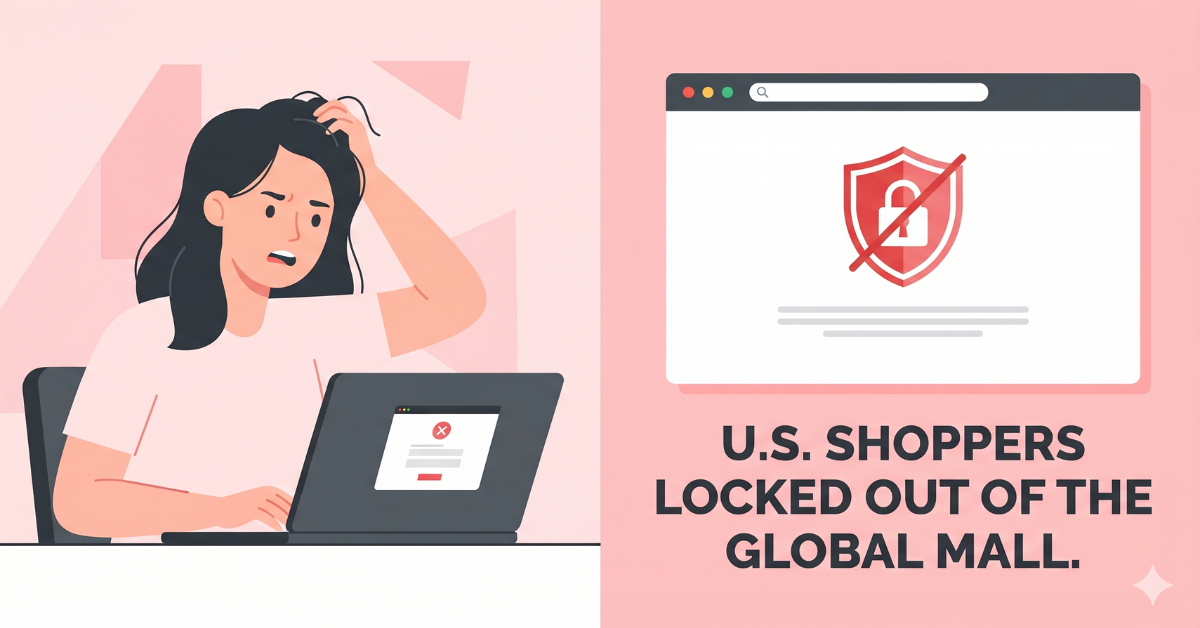
Meanwhile, the original global mall — the one that had served Olive Young shoppers from Seoul to Sacramento to Ho Chi Minh City for years — became inaccessible to US visitors almost overnight. No transition period, no parallel option. Just a locked door and a redirect to the new, pricier, more limited site.
So American shoppers did what frustrated communities with technical know-how tend to do: they started asking whether a VPN could get them back in.
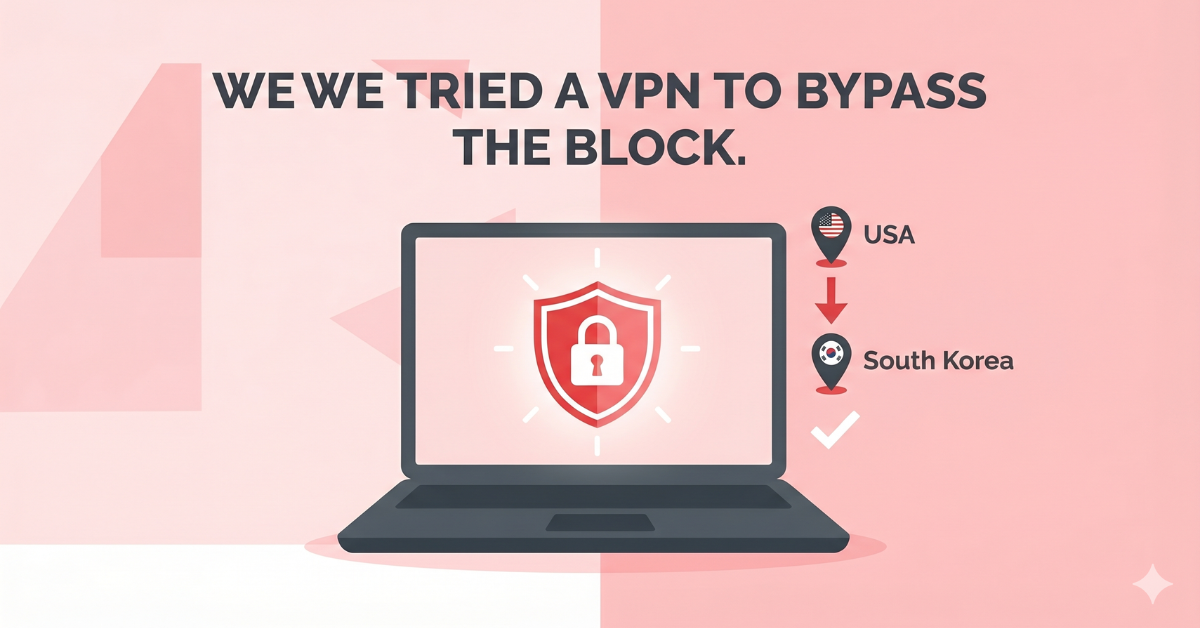
Step One: Getting Past the Geo-Block
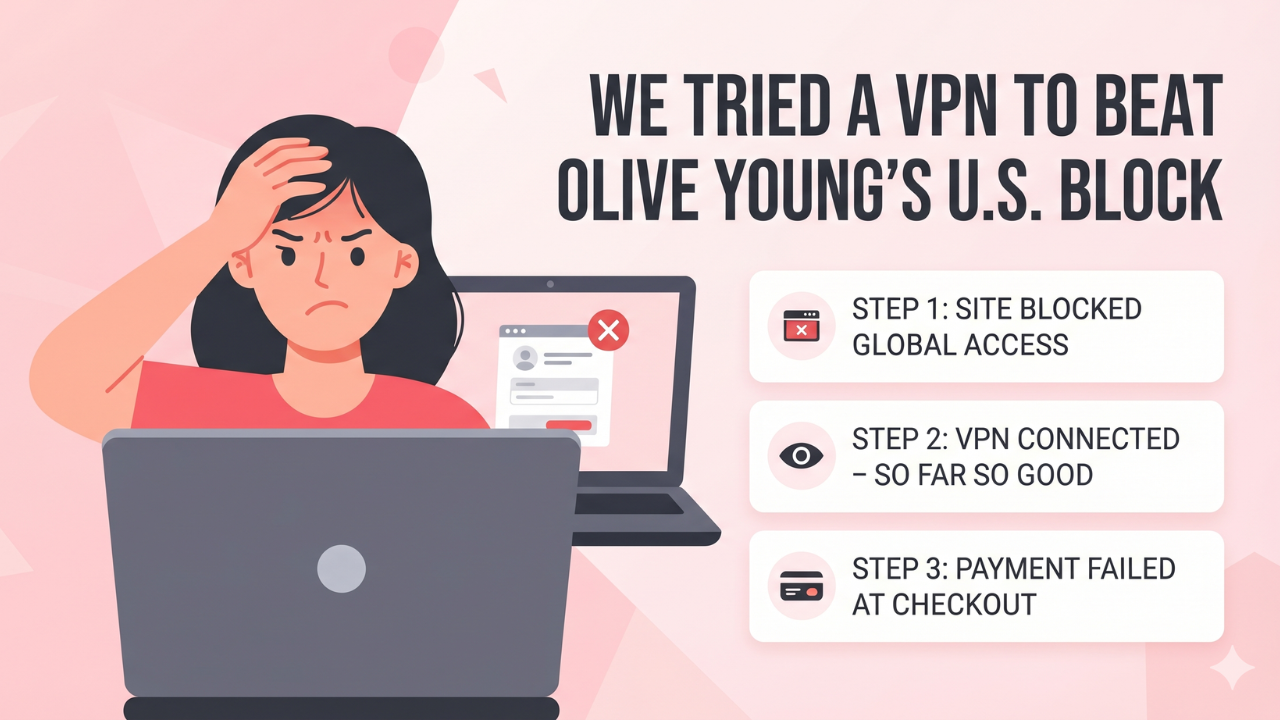
The first part of the experiment went smoothly enough — almost suspiciously so. Connecting through a VPN server based outside the US immediately changed how the site behaved. The global mall, which had been redirecting US-based traffic straight to the new exclusive site, suddenly recognized our connection as coming from a different region and let us back into the familiar layout: the same product catalog, the same membership tier structure, and — this is the part that actually matters — the same pricing we remembered from before the migration.
For a few minutes, it genuinely felt like time travel. We could browse the Anua PDRN serum bundle, see it priced the way it used to be priced, and add it to a cart without any obvious friction. If the experiment had ended there, the headline would have been simple: yes, a VPN works, problem solved, go reclaim your old shopping experience.
It did not end there.
Step Two: Where It Actually Falls Apart
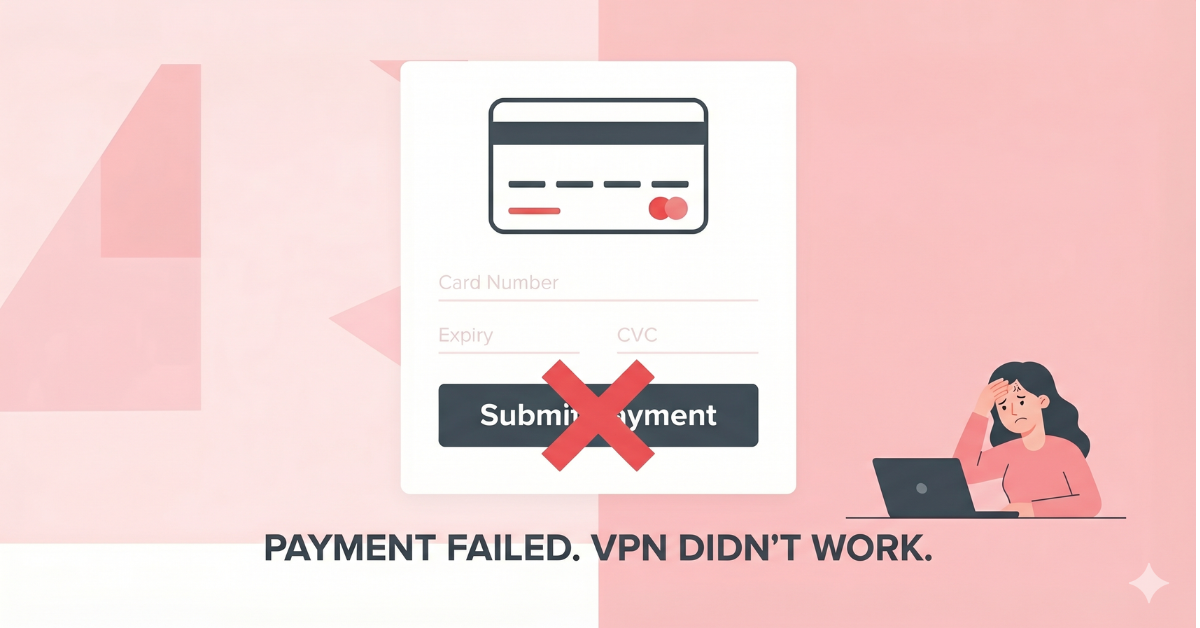
Checkout is where geography catches up with you, no matter how convincing your VPN connection looks on the surface. The payment form accepted our shipping address without complaint, but the moment we submitted a US-issued card, the transaction was declined. Not a vague server error — a clear payment failure tied to a mismatch between the IP address the site detected, the billing address on file, and the card issuer’s own fraud-detection systems.
This is the part that a lot of “just use a VPN” advice glosses over. A VPN can change what region a website thinks you’re browsing from, but it can’t change where your bank thinks your card actually is. Card networks and payment processors run their own independent location checks, separate from whatever the retailer’s site sees. When those two signals disagree — a Korean or European IP address paired with a US-issued card and a US shipping address — many payment gateways treat that mismatch as a red flag worth blocking outright, even if the underlying purchase is completely legitimate.
We tried adjusting the VPN server location to better match a country closer to our actual billing region, on the theory that a smaller geographic mismatch might pass the fraud check. It didn’t meaningfully change the outcome. We also tried switching browsers and clearing cookies, in case the site was using device fingerprinting on top of IP detection — also no luck. The transaction failed every time we got to the final submission step.
To be clear: this isn’t a story about Olive Young’s checkout system being unusually aggressive. Most retailers, especially ones handling beauty products with strict regional distribution agreements, build in exactly this kind of cross-checking specifically to prevent the situation we were trying to create. The VPN got us through the front door. It could not get us through the cash register.
What This Actually Means If You’re Tempted to Try It Yourself
If you’re considering doing this yourself, here’s the honest rundown based on what we experienced. Browsing works. You can absolutely view the old global catalog and old pricing structure through a VPN, and for research or comparison purposes — checking whether a product you’re considering is actually cheaper elsewhere — that’s genuinely useful. Buying is a different story. Unless you also happen to have a foreign-issued payment method and are comfortable navigating the legal and practical gray area of using one for cross-border purchases, the checkout wall is likely to stop you exactly where it stopped us.
There’s also a practical point worth making clearly: bypassing a retailer’s regional access controls can run up against that retailer’s own terms of service, even when the intent is as simple as “I just want my old shopping experience back.” We’re not in a position to tell you whether that risk is worth taking for your own situation — that’s a judgment call that depends on your own priorities — but it’s a real consideration, not just a technicality.
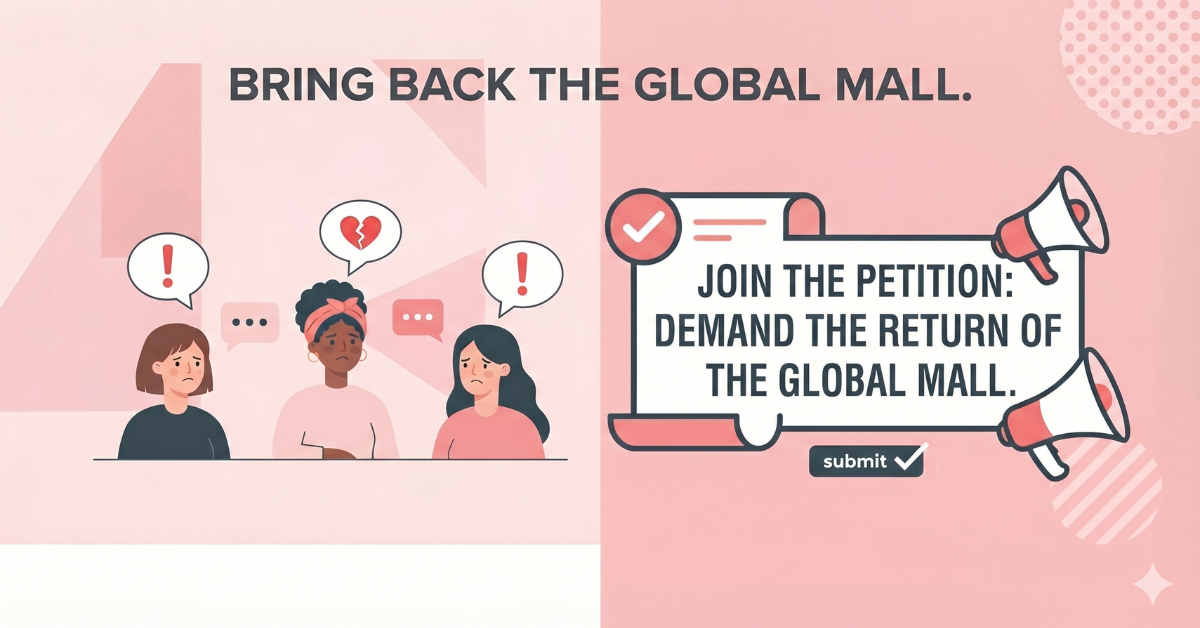
The Bigger Pattern: A Community That Won’t Let This Go Quietly
What’s striking is how organized the pushback has become in just a few weeks. Threads comparing old global-mall prices to new US-mall prices keep circulating. Petitions asking Olive Young to reopen global access to US customers have picked up real traction across Reddit and Instagram. And in the comment sections under Olive Young’s own official statements, the most common request isn’t “fix the bugs” or “add more stores.” It’s simpler and more direct: give us the global mall back.
That’s a meaningful signal for any retailer to sit with. Shoppers aren’t rejecting the brand itself — demand for the actual products hasn’t dropped. They’re rejecting the idea that “localization” should mean paying more for less, and they’re vocal enough about it that workaround attempts like VPN testing have become their own small subculture within the broader backlash.
So Where Does That Leave US Shoppers Right Now?
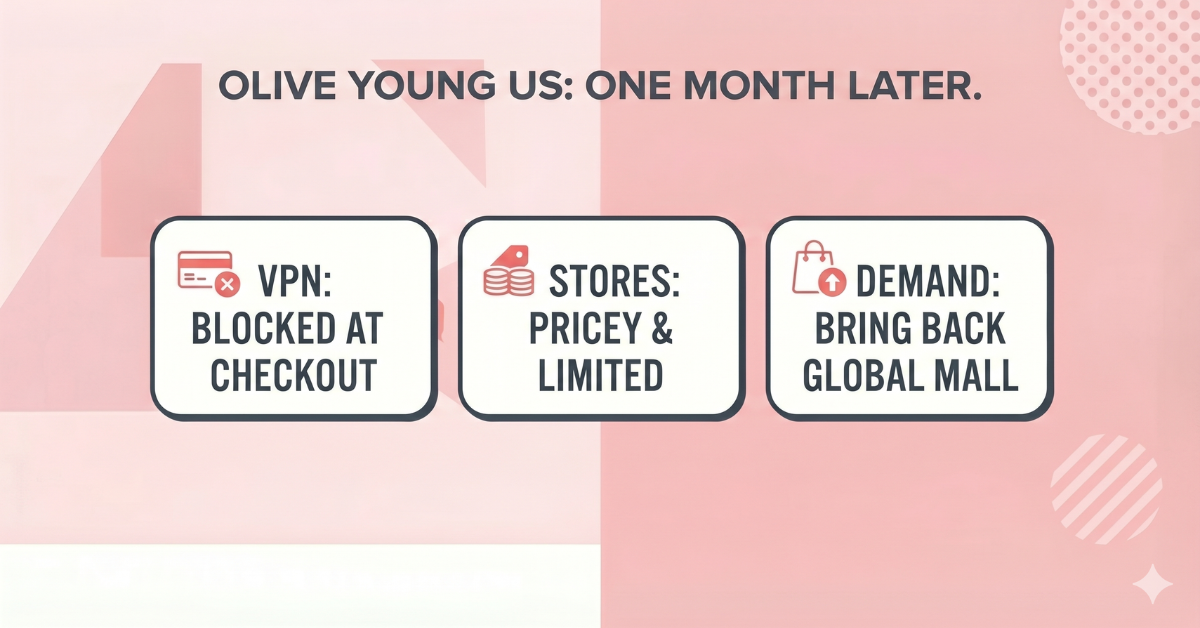
Practically speaking, if the VPN route isn’t reliably getting you through checkout, the more realistic path for global-mall-style pricing and selection right now runs through other established global K-beauty retailers that never built region-locked checkout systems in the first place. Stylevana is one of the names that keeps coming up in these comparisons, since it ships the same broad catalog of Korean exclusives — Anua, COSRX, Medicube, and beyond — directly to the US without the kind of geo-restricted checkout that stopped our VPN experiment cold.
None of this is a guarantee that prices will always be lower across every single product; that’s worth checking item by item, the same way we’d recommend comparing any two retailers. But it’s a far less technically fragile path than trying to out-maneuver a payment processor’s fraud detection system, and it doesn’t carry the same terms-of-service ambiguity that comes with actively bypassing a regional block.
As for whether Olive Young eventually reopens global access to US shoppers, or softens its membership thresholds in response to the ongoing pressure — that’s still genuinely unclear. What is clear is that the appetite for a workaround hasn’t faded one bit a month into this saga, and we doubt it will until the company addresses the underlying complaints rather than the access method shoppers are using to get around them.
💡 Frequently Asked Questions
Can a VPN actually get you into Olive Young’s global mall from the US?
A VPN can get you past the browsing-level geo-block, letting you view the old catalog and pricing. It does not reliably get you past checkout, since payment processors run independent location checks tied to your card and billing details that a VPN doesn’t change.
Is using a VPN to bypass a retailer’s regional restrictions risky?
It can conflict with a retailer’s terms of service, even when the goal is something as simple as accessing a previous shopping experience. It’s worth weighing that risk for yourself rather than assuming it’s risk-free.
Is there a more reliable way to access the global K-beauty catalog from the US?
Yes — other global K-beauty retailers, including Stylevana, ship a similar catalog of Korean exclusives directly to the US without the same region-locked checkout issues we ran into during our VPN test.
A note on browsing privately while you compare prices: if you’re going to keep checking regional pricing across sites — VPN or not — a reliable, fast connection makes the whole process less of a headache. NordVPN is the service we used throughout this test for stable server switching and consistent speeds while comparing global vs. US pricing. Just keep in mind, as covered above, that it gets you past browsing restrictions — not payment-level checks.
✨ Weekly K-Beauty tips & skincare secrets — straight to your inbox
Free subscription · Cancel anytime