Inside the Formula: How Centellian24 Engineered 30,000ppm of Centella Asiatica Into a Single Cream
Centellian24 Madeca Cream Time Reverse is the clearest example right now of what happens when Korean cosmetic science turns a single botanical extract into a full research platform. While most Western skincare treats “centella” as a soothing footnote on an ingredient list, Korean derma-cosmetic house Centellian24 has spent over five decades isolating, concentrating, and re-engineering it into a dedicated anti-aging technology.
This is a full ingredient and formulation breakdown of the brand’s flagship result: the Madeca Cream Time Reverse + Toning Essence.
The Technology: TECA, Explained
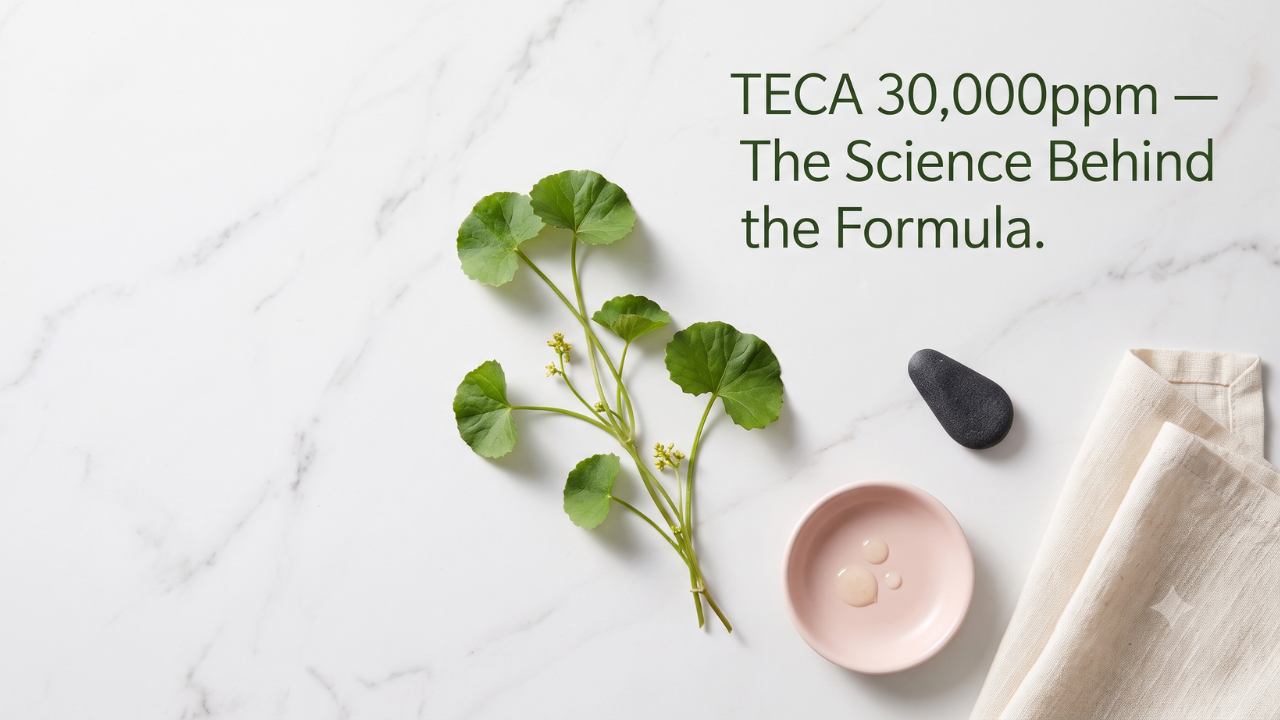
TECA — Titrated Extract of Centella Asiatica — is a standardized active complex isolated from the Centella Asiatica plant, containing asiaticoside, asiatic acid, and madecassic acid. Unlike a raw plant extract, “titrated” means the concentration of these active compounds is measured and controlled batch to batch, which is closer to how a pharmaceutical actuve would be formulated than how a typical botanical skincare ingredient is sourced.
In the Madeca Cream Time Reverse, TECA is dosed at 30,000ppm — a concentration well above what’s typical in mass-market centella moisturizers, most of which use trace amounts primarily for marketing purposes. This is the formulation detail that positions the cream as a genuine anti-aging treatment rather than a simple soothing balm.
A Brand Built on Pharmaceutical Rigor
Centellian24 is the derma-cosmetic line of Dongkook Pharmaceutical, a Korean pharmaceutical company with a long history of studying Centella Asiatica’s wound-healing and anti-inflammatory properties in a clinical context, well before the ingredient became a global skincare trend. That pharmaceutical lineage is precisely why the brand’s formulations skew toward higher, more clinically-inspired concentrations rather than the trace-ingredient dusting common across the category.
It also explains why the cream is manufactured by Kolmar, one of Korea’s most established contract cosmetics manufacturers — a detail that speaks to formulation consistency and quality control, both of which matter more as active concentrations climb.
The Full Ingredient Architecture
Ceramides & Peptides — Structural Support
Ceramides function as the lipid “mortar” between skin cells, and their depletion is directly linked to increased sensitivity and moisture loss. Layered with peptides — short chains of amino acids that signal skin to behave in more youthful patterns — this pairing targets both barrier integrity and the visible loss of firmness that comes with age.
Dual-Weight Hyaluronic Acid
The formula combines sodium hyaluronate with hydrolyzed hyaluronic acid — a higher-molecular-weight form that sits on the skin surface to plump and smooth, alongside a lower-molecular-weight version engineered to penetrate more deeply. This dual-weight approach is a hallmark of more technically ambitious K-Beauty formulations, and it’s designed to hydrate at multiple skin depths simultaneously.
Collagen Amino Acids & Elastin — The “Time Reverse” Core
Collagen and elastin are the two structural proteins most responsible for skin’s firmness and bounce, both of which decline steadily with age. While topical collagen molecules are too large to penetrate deeply, they support the skin’s outer barrier and visibly improve surface smoothness and hydration retention — the mechanism behind the product’s namesake claim.
Niacinamide — Tone & Radiance
Niacinamide rounds out the formula with well-documented brightening and barrier-supporting properties, complementing the firming work of TECA and the peptide complex with a visible improvement in tone evenness.
Effects by Skin Type
Dry Skin: This is the formulation’s ideal match. The ceramide-and-collagen-forward base delivers sustained hydration and noticeably reduces tightness, particularly in the cheek and jaw areas where dryness tends to concentrate.
Normal / Mature Skin: Expect the most visible firming benefit here, as the collagen-elastin-peptide complex is specifically engineered to address the elasticity loss that becomes more pronounced from the mid-30s onward.
Combination Skin: Fully compatible, though those with an oilier T-zone may prefer a thinner application there, reserving a richer layer for drier areas like the cheeks.
Oily / Acne-Prone Skin: The richness of this cream may feel heavier than ideal; a lighter, gel-based centella formulation is typically a better fit for this skin type.
Sensitive Skin: The formula includes a botanical fragrance blend (bergamot, lavender, rose, and citrus peel oils among others). A 24–48 hour patch test on the inner arm is recommended before full facial use. This product also contains Retinol, so anyone pregnant, nursing, or new to actives should consult a dermatologist first.
Choose the store that works best for you:
These are affiliate links; we may earn a commission at no extra cost to you.
Formulating Around an Active Ingredient: What It Means for Layering
Because the Madeca Cream Time Reverse already contains Retinol, it functions as your retinol step rather than an addition to one. If your existing evening routine includes a separate retinol serum, the more technically sound approach is to alternate nights between the two rather than stacking both — at least until your skin has established tolerance to the combined actives.
Vitamin C used in the morning pairs well with this cream at night, since the two don’t overlap in application timing and the antioxidant support from vitamin C can complement the barrier-repair activity happening overnight. If chemical exfoliation (AHA/BHA) is part of your routine, limiting it to two or three evenings a week — and reserving the Madeca Cream for the remaining nights — is a more conservative and typically better-tolerated approach than combining active exfoliation with a retinol-containing cream in the same slot.
For those newer to retinol-containing formulations broadly, a gradual introduction — two to three applications per week, building up over several weeks — tends to produce the most comfortable adjustment period. Mild dryness or flaking in the first two weeks is a normal adaptation response; persistent redness or irritation beyond that window is a signal to reduce frequency.
A Realistic Results Timeline
Weeks 1–2: The most immediately noticeable phase, driven by the ceramide and TECA complex working to reinforce the barrier — expect improved hydration and reduced reactivity first.
Weeks 3–6: Texture and tone-evening effects tend to become more apparent as niacinamide and sustained hydration continue to work on the skin’s surface.
Weeks 8–12: This window is where visible firmness and fine-line improvements are most likely to emerge, as the collagen-supporting complex and Retinol component accumulate consistent use. As with any formulation, individual timelines depend on skin type, application consistency, and starting condition.
Where This Fits in the Global K-Beauty Conversation
Centella Asiatica has become one of the defining ingredients of the current K-Beauty export wave, largely because it bridges two consumer priorities that used to feel opposed: gentle, barrier-friendly formulation and visible, results-driven performance. Most of the centella products that reached global markets first — the cult cica creams and soothing gels — were built for calming, not correcting.
The Madeca Cream Time Reverse represents the next phase of that trend: the same trusted, low-irritation botanical, reformulated at a much higher concentration and paired with proven anti-aging actives like peptides, collagen, and elastin. It’s a useful signal of where centella-based skincare is heading globally — from soothing staple to serious firming treatment.
💡 Frequently Asked Questions
How do I use Centellian24 Madeca Cream Time Reverse?
Apply after cleansing and toning, ideally following the matching Toning Essence, both morning and night. Use a pea-to-almond-sized amount and press gently into skin. Because the formula contains Retinol, daytime use should always be followed by sunscreen.
Is this cream right for my skin type?
It performs best on dry, normal, and mature skin seeking firmness and deep hydration. Oily or highly reactive skin types may find a lighter, fragrance-free centella formula more comfortable.
Why trust this recommendation?
This breakdown is based on the official ingredient list and product data published by Olive Young US, Olive Young Global, and Amazon. We link directly to official retailers rather than third-party resellers, ensuring product authenticity and each retailer’s standard shipping and return terms.
Beauty disclaimer: Always patch-test new skincare products before full application, especially if you have sensitive skin or known allergies. Individual results may vary. This post contains affiliate links.
✨ Weekly K-Beauty tips & skincare secrets — straight to your inbox
Free subscription · Cancel anytime